





How can researchers use historical weather data by ZIP code or city?
Weather Data for Academia and Research
The Visual Crossing API provides reliable weather data for academia and research institutions studying climate science, environmental history, or atmospheric trends. With well-sourced data from weather stations and satellites around the world, our data products have the hyper-local precision and global coverage necessary for a range of research purposes.

Turn weather data into stronger research and modeling outcomes
Academic institutions need data sets with the highest possible quality control, including adjustable parameters and rich historical datasets. However, commercially focused tools often don’t provide detailed information on specific metrics, like hourly precipitation measurements from 20 years ago or hyper-local observations.
We provide a plethora of datasets for any academic need, whether that is model training, environmental studies, long-term forecasting development, or climate studies. Our collection of reliable, standardized resources is ready to be imported into any tool with no extra steps.
Available academia and research weather elements

Historical Weather Data by ZIP Code
Explore hourly, monthly, or seasonal trends for any ZIP code, perfect for localized research projects.

Historical Weather Data by City
Improve your urban studies project or perform city-level comparisons across time periods with city-specific weather patterns.

Climate Data
Having quality data for only one country isn't enough if you're modeling the global atmosphere or predictive climate scenarios. Our API provides years of historical data from a network of weather stations worldwide.

Global Forecast Data
Storm surges, lightning, blizzards, floods, ice storms, and other extreme weather events can cost businesses thousands of dollars due to increased safety risk and delays. High-quality weather data helps transport teams perform precise risk assessments that prevent these losses.

Bulk Weather Data Download
Large-scale research collaborations, model building, or analysis need large amounts of quality data. Download thousands of records across multiple locations in one file.

Long-Term Weather Patterns
Long-term data is crucial for climate forecasting, such as predicting how severe storms may change as temperatures rise. Our high-quality long-term forecasting uses LLMs and statistical analysis to offer the most precise predictions.
Key weather API features for academia and research
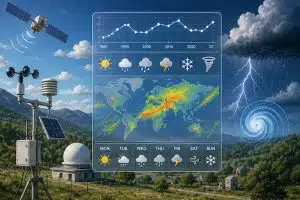
Historical and forecast data
Query thousands of records from ground-based stations & satellites and access forecasts from global & local computer models
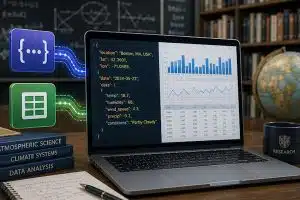
CSV and JSON Results
Obtain rich JSON structures or easy-to-use CSV from any API call, perfect for sharing with research partners or importing into Excel tables.
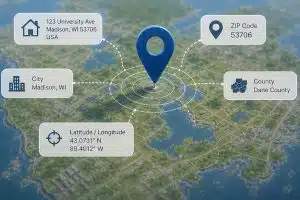
Location address geocoding
Use a range of geocoding forms depending on your specific needs, such as address, ZIP code, county, city, or latitude/longitude.
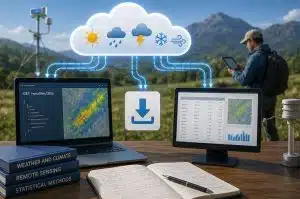
Weather API or direct download
Query data using our RESTful API, great for field research, or download data via our web-based Query Builder for large-scale research projects.

Historical Weather Analysis by ZIP Code and City
We offer reliable historical records from trusted sources such as the National Climatic Data Center and the UK Met Office, which are cleaned and standardized so that each source provides the same data in the same units.
This is crucial for academic applications in which researchers may want to explore regional variations at the ZIP code and city levels. Better geographic specificity means better comparisons across locations and more precise localized studies.
Climate and Environmental Modeling
Academic publications in climate or environmental modeling require rigorous, defensible reviews, which can only be achieved with high-quality data. Our global system of weather stations has been collecting data for decades, enabling scientists to see how key metrics have changed over time.
Weather Data for Machine Learning
Machine learning is one of the most exciting scientific developments, as it can process vast datasets and identify links between measurements that human users have missed. However, AI models require clean, standardized datasets, such as those provided by the Visual Crossing API. Whether your teams are exploring new AI features or incorporating machine learning into your workflows, the API provides the foundational references necessary for high-quality studies.
Bulk Dataset Access and Download
Bulk downloads are a crucial service for scientific applications, as your teams may need to search through thousands of records to construct maps, develop technical summaries, or employ machine learning. With the Visual Crossing API, you can enjoy wider dataset coverage and streamlined workflows, helping you get your projects done faster.

Long-Term Weather Analysis
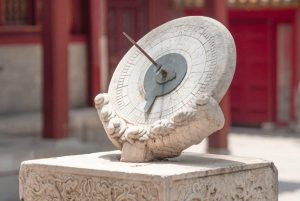
When studying climate trends, refining long-term forecasts, or conducting a time-series review, teams need access to standardized longitudinal data. The Visual Crossing API allows you to review over 50 years of hourly, daily, or monthly records from anywhere in the world with a single API call.
Academic Research and Teaching
In addition to scientific projects, universities can use the Visual Crossing API in coursework and modeling exercises to enrich students’ understanding of weather. For example, students could study how wind speed and direction vary in a nearby city, based on geographic features such as elevation or coastline.

Start today for free
Sign up for a free account now and immediately begin using our weather API to query accurate forecast & historical data for any global location.
With a wealth of data from the past to the present, the Visual Crossing API supports a range of scientific applications, including climate studies and machine learning. Bulk data access enables reviewing thousands of records on a single page, which is highly convenient for working groups. Contact us to learn how we make institutional access affordable.
FAQs about Weather Data for Academia and Research
ZIP code or city-level datasets are valuable for understanding how the climate has changed at a single site over time or for identifying factors that influence weather.
Temperature, precipitation, wind speed, humidity, and storm frequency are highly valuable for climate and environmental modeling.
Machine learning and academic projects require large volumes of clean, standardized data, which enables algorithms to infer connections between values over time.
Universities and institutions may need to review years of data or develop a time series based on specific observations, such as storm timing. Bulk download makes this much faster and easier than searching for one record at a time.
Forecasting requires long-term data to build predictions, while understanding trends requires years of observations following the same metrics. With the Visual Crossing API service, academics can access years of clean, standardized data from high-quality sources.