





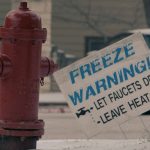

How can weather data improve workforce scheduling and shift planning?
Weather Data for Workplace and HR Planning
Weather data for workforce and HR planning can give your company a competitive edge, as many business leaders fail to consider how weather events influence operational efficiency. High-quality weather insights enhance workforce forecasting and reduce downtime due to extreme weather events.
Weather-informed contingency plans can also help you maintain business continuity during natural disasters, getting you back to work faster while protecting your field teams from danger.
The Visual Crossing API is easily integrated into workforce data analysis and human resources workflows, making it an essential tool for organizations seeking to streamline their business operations without adding unnecessary steps.

Protect field teams before weather disrupts the workday
General weather forecasts are not enough when employee safety is at stake. Consumer-facing weather products often provide averages across a whole region rather than hyper-local forecasting, meaning that extreme heat spikes or high winds may be missed.
HR leaders can use weather-informed predictive analytics to develop more refined workforce protection strategies or assess future staffing needs based on real-world environmental conditions. For example, when temperatures are high, you may need to bring additional workers into the field to accommodate frequent breaks, ensuring that all workers share the burden and do not suffer heat stress.
A better understanding of adverse weather conditions can also improve business continuity plans, including how storms may affect the supply chain or reduce productivity. Overall, this creates stronger workforce resilience, better safety compliance, and a more agile business strategy.
Available workplace and HR planning weather elements

Temperature
Extreme temperatures can lead to downtime and endanger workers. With temperature-aware shift planning, HR leaders can reduce exposure risks and protect employees.

Heat Stress Conditions
Extreme heat can lead to high employee turnover rates and potential fines for ignoring worker well-being. Anticipating heat-related risks keeps employees safe and reduces work stoppages.

Precipitation
Rain and snow can make it difficult to continue working, access sites, or travel into the field. With advance warning, HR leaders can identify the right mitigation measures to reduce the impact of precipitation on field schedules.

Wind
High winds can lead to total work stoppages, especially for workers at height or when using certain equipment. With precise wind gust and speed measurements, teams can know exactly when to stop work and allocate resources to other tasks.

Severe Weather Alerts
The unpredictable nature of fast-moving storms, lightning patterns, or tornadoes means that HR teams need highly precise, local data. With severe weather alerts, organizations can make immediate, informed decisions that will save lives.

Multi-Site Weather Risk
Multi-site weather visibility is crucial for large projects and regional or international firms. Tracking weather across multiple regions ensures that the right talent is in the right place based on current conditions.
Key weather API features for workplace and HR planning
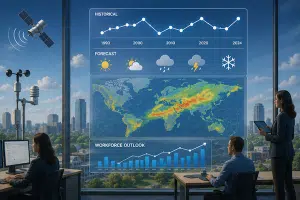
Historical and forecast data
Understand how past decades inform workforce patterns with historical reports from ground-based stations & satellites. Secure high-quality forecasts from global & local computer models to better predict future workforce requirements.
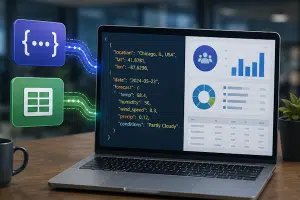
CSV and JSON Results
Any API call can return JSON structures or easy-to-use CSV, depending on what workforce planning software you use.
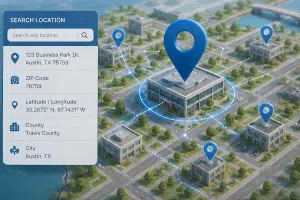
Location address geocoding
Scout new locations or monitor developing weather at a specific site by searching via address, ZIP code, latitude/longitude, county, city, and more.
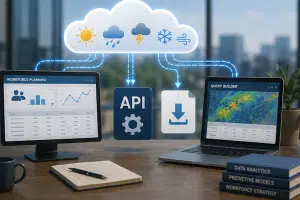
Weather API or direct download
Query data using our RESTful API for use in any workforce planning app, or download data via our web-based Query Builder to build predictive models for upcoming market trends.
How workplace and HR planning teams use weather data

Workforce Scheduling
Most organizations take reactive measures to sudden weather changes, which leads to unnecessary worker exposure and downtime. You can stay ahead and reduce downtime-related costs by incorporating weather analysis into your daily workflows.
For example, assume the forecast calls for heavy precipitation during the AM shift at one worksite, tapering into a light drizzle by the afternoon. Another site has clear skies all day. With this in mind, your team can adjust work schedules and labor allocation to the site with better weather conditions while prioritizing indoor activities at the first site. This ensures maximum productivity and worker safety.
Weather can also inform your hiring strategies. Adverse conditions often lead to higher staffing requirements, as workers spend less time outside and may not be at peak productivity. Knowing the long-range forecast enables more accurate predictions of future needs and helps avoid issues like overhiring.
Field Worker Safety
Field workers are highly vulnerable to extreme weather events, making high-quality weather analysis essential for their safety. Weather readiness starts by planning job-site activities around the forecast rather than hoping for the best, which can lead to adverse outcomes such as frostbite.
Past data can assist in risk modeling, helping your team adjust schedules based on expected events. You can also screen your current employees with skill gaps, such as how to identify heat stroke, and provide them with continuing education on handling common weather events.
Early warnings of hazardous conditions let you protect workers from issues like extreme cold or high winds by planning for shorter shifts, requiring mandatory warming breaks, or bringing extra heaters to the site. Overall, this reduces worker safety incidents and improves employee satisfaction.
Companies operating in remote areas, such as oil and gas companies or logging businesses, must be especially cautious about extreme weather, as working conditions can become extremely dangerous when conditions degrade. It can also be difficult to move employees out of the area once severe weather hits, meaning that contingency plans must be in place before workers leave for their shift.
High-quality forecasting must not only be accurate but also hyperlocal. The Visual Crossing API provides highly granular weather intelligence that can pinpoint micro-weather trends for any location on Earth using latitude, longitude, or an address.
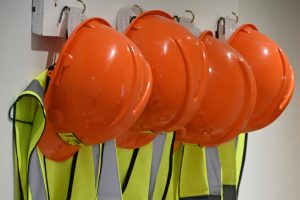
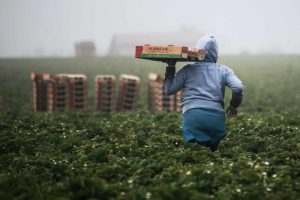
Weather Alerts for Field Teams
Weather alerts give you actionable insights into current conditions so that you can make prompt, data-based decisions about work stoppages or evacuations.
For example, you can set alerts in your workforce planning software when certain thresholds have been crossed, such as a certain amount of precipitation within an hour or when lightning has been detected within a five-mile radius of a worksite. You can then quickly communicate with field workers and supervisors to implement contingency plans or safely evacuate workers from the affected area.
Faster communication means faster reactions when conditions degrade, which naturally flows into safer operations overall. These alerts are especially important for catastrophe-prone areas like remote worksites, where a delay of even a few minutes could leave workers trapped
Heat Stress Monitoring
Extreme heat is among the greatest threats to worker safety. Not only does it endanger your bottom line due to work stoppages and delays, but continued mismanagement of heat exhaustion may cause your internal talent to seek safer opportunities with a competitor.
Weather intelligence can support better heat safety planning. You can review previous research and expert opinions to determine what parameters require certain interventions, such as starting shifts earlier in the day, and then set up alerts when the forecast suggests similar conditions.
Companies also need to consider interventions like hydration planning, misting fans, shade allocation, and frequent breaks when temperatures are expected to reach certain thresholds. Not only does this protect employees, but it also ensures you remain compliant with OSHA guidelines and can be a selling point when attracting new talent.

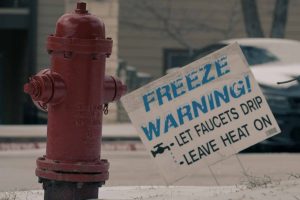
Safety Compliance and Risk Visibility
Workforce protection and safety compliance should be a focal point of business continuity plans. Documented planning for extreme weather events enables more defensible operational decisions during fast-moving situations, such as natural disasters, because your team has already determined the optimal outcome.
Companies can plan ahead and improve risk visibility by leveraging big data and machine learning. Feed the Visual Crossing API’s historical records into an algorithm to pinpoint relationships between adverse outcomes, such as heat-stroke incidents and temperature. You can then develop better compliance strategies with concrete action plans for different outcomes.
Overall, this ensures stronger workforce protection and better safety compliance, which can translate directly to cost savings and better employee retention. It can also improve your hiring process, as workers may check your compliance record before choosing to interview with you. Being able to prove that you can keep them safe on the clock is often a major selling point, especially for workers in dangerous fields like construction or field research.
Workforce Management Integrations
The Visual Crossing API seamlessly integrates with workforce planning tools, scheduling software, and operational workflows. This can open up a range of opportunities for better planning and smoother business operations.
For example, you could run a regression analysis on historical data to examine the relationship between specific weather events and employee turnover. Businesses entering new markets can assess the likelihood of natural disasters in the region to build workforce resilience into their hiring plans.
International organizations can check the weather in any region, from the Middle East to North America, with a single query. This helps businesses communicate with their regional offices more effectively and coordinate international projects with minimal disruption.
One of the main benefits of the Visual Crossing API is its hyper-local forecasting, which uses AI-powered downscaling. You can see the exact conditions in any given location rather than general averages across a broad area. On-site conditions can vary significantly even within a single city, and general forecasts will only provide averages.
With this more granular information, you can make more informed decisions, such as where to allocate resources, when to transfer workers between sites, and how to schedule shifts for maximum productivity.

Start today for free
Sign up for a free account now and immediately begin using our weather API to query accurate forecast & historical records for any global location.
Learn how high-quality weather intelligence can protect your current workforce, inform your hiring decisions, and improve customer satisfaction through reduced downtime and better scheduling. Our scalable products suit companies of all sizes, from local businesses to international organizations.
FAQs about Weather Data for Workplace and HR Planning
Teams can schedule around adverse weather events, such as high temperatures, rather than taking reactive measures when conditions degrade. They can also plan shifts more effectively to maximize productivity and worker safety.
Weather signals that matter most include temperature, wind speed, precipitation, UV index, and humidity.
Weather alerts ensure that businesses have advanced warning of potentially dangerous conditions, such as lightning within a five-mile radius or dangerously high winds. This enables them to take proactive measures, such as evacuating workers and protecting delicate instruments.
Extreme weather can lead to compliance issues, such as working at height in high winds or exposing employees to dangerously high humidity. By analyzing weather conditions, businesses can build these risks into their future workforce planning, like knowing exactly when to shut down equipment.