

The Timeline Weather API includes weather data for agriculture. These agricultural weather elements that are designed for use by the agricultural, farming and horticultural industries. These elements are designed to providing weather data that influence those who grow plants or raise livestock.
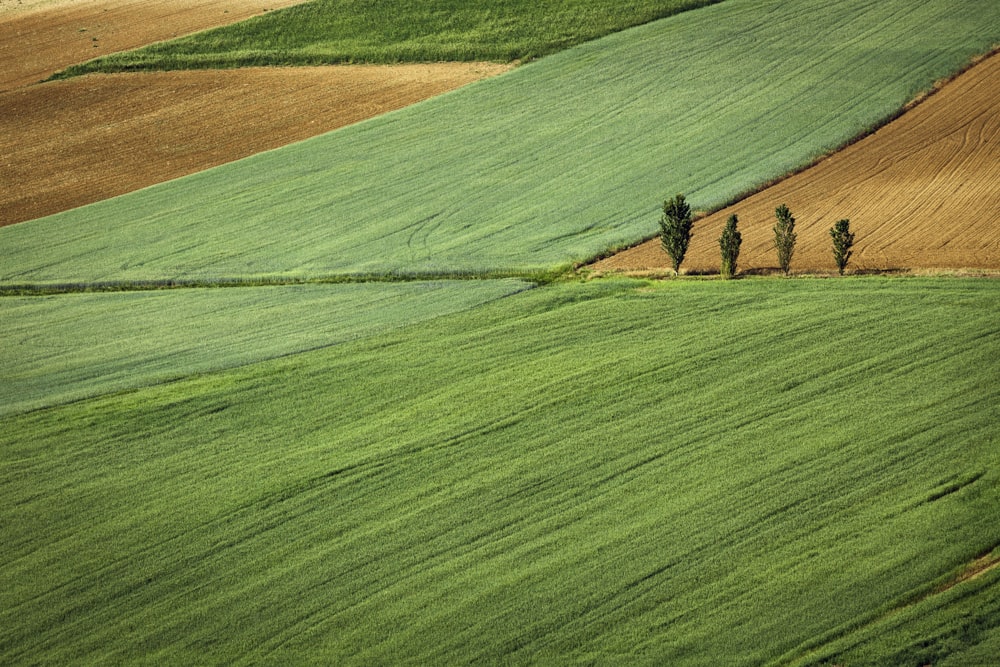
The Timeline Weather API provides specific parameters tailored for agronomic modeling. For a complete look at how these metrics are applied across the farming and agribusiness sectors, explore our dedicated agriculture weather solutions page.
The elements on this page are available only to certain subscription levels. For more information, please see our pricing page.
Degree days
The Timeline Weather API provides degree day calculations for all historical and forecast periods.
For full information on including current and accumulated degree values into the Timeline API response, please see our Degree Days Weather API article.
Soil temperatures
The API provides four depths of soil temperatures: 0-0.1m, 0.1-0.4m, 0.4m-1.0m and 1.0-2.0m. Each soil temperature is calculated at the hourly level. Daily values are the average (mean) of the hourly values. The temperature is returned in Celsius, Fahrenheit or Kelvin based on your ‘unitGroup’ parameter.
soiltemp01 – the soil temperature for depth 0-0.1m.
soiltemp04 – the soil temperature for depth 0.1-0.4m.
soiltemp10 – the soil temperature for depth 0.4-1.0m.
soiltemp20 – the soil temperature for depth 1.0-2.0m.
Soil temperatures are currently available for forecast and history since April 1st 2022 on an hourly basis. . Please contact Technical Support for more information on the availability of older historical soil temperatures.
Requesting soil temperatures using the Weather API
To request soil temperatures from the Weather API, include the values in the ‘elements’ parameter of the request. You can combine the soil temperature elements with other weather elements such as the following example that includes temperature.
https://weather.visualcrossing.com/VisualCrossingWebServices/rest/services/timeline/Denver,CO?unitGroup=metric&key=YOUR_API_KEY&contentType=csv&include=days&elements=datetime,temp,soiltemp01,soiltemp04,soiltemp10,soiltemp20
Soil moisture
Soil moisture levels are available for the same depth levels as soil temperature: 0-0.1m, 0.1-0.4m, 0.4m-1.0m and 1.0-2.0m. There are two forms of soil moisture elements – soil moisture content which provides the amount of water in inches or mm (depending on your unit group) or as a soil moisture content as volumetric fraction ranging from 0 to 1.
soilmoisture01 – the soil moisture for depth 0-0.1m
soilmoisture04 – the soil moisture for depth 0.1-0.4m.
soilmoisture10 – the soil moisture for depth 0.4-1.0m.
soilmoisture20 – the soil moisture for depth 1.0-2.0m.
soilmoisturevol01 – the soil volumetric moisture for depth 0-0.1m
soilmoisturevol04 – the soil volumetric moisture for depth 0.1-0.4m.
soilmoisturevol10 – the soil volumetric moisture for depth 0.4-1.0m.
soilmoisturevol20 – the soil volumetric moisture for depth 1.0-2.0m.
Soil moistures are currently available for forecast only and history since April 1st 2022 on an hourly basis. . Please contact Technical Support for more information on the availability of older historical soil moisture elements.
Requesting soil moisture using the Weather API
https://weather.visualcrossing.com/VisualCrossingWebServices/rest/services/timeline/Denver,CO?unitGroup=metric&key=YOUR_API_KEY&contentType=csv&include=days&elements=datetime,soilmoisture01,soilmoisture04,soilmoisture10,soilmoisture20,soilmoisturevol01,soilmoisturevol04,soilmoisturevol10,soilmoisturevol20
Evapotranspiration
et0 – reference evapotranspiration et0
Evapotranspiration provides a measurement of the amount of moisture that will be evaporated or transpired from a given location based on the weather conditions. This value is calculated using the Penman–Monteith method which incorporates the solar radiation, air temperature, air humidity, and wind speed to calculate the estimated value of evapotranspiration. The value is calculated on an hourly basis and is the aggregated (via a sum) to provide daily estimates. The evapotranspiration values are specified in mm or inches based on your unit group selection.
Evapotranspiration is available for forecast and historical hours and days.
Requesting evapotranspiration using the Weather API
https://weather.visualcrossing.com/VisualCrossingWebServices/rest/services/timeline/Denver,CO?unitGroup=metric&key=YOUR_API_KEY&contentType=csv&include=days&elements=datetime,et0
Wet bulb and deltaT
The web bulb temperature is an optional element that indicates the level of water vapor in the air, similar to the humidity element. A wet bulb temperature near the air temperature indicates a high amount of water vapor. If the web bulb temperature and air temperature are the same, the air is saturated (and the relative humidity will be 100%).
The deltaT element provides the difference between the dry bulb and wet bulb temperature.
Both wet bulb temperature and deltaT use the same temperature unit as the air temperature, depending on the selected unit group.
Requesting wet bulb and deltaT elements using the Weather API:
https://weather.visualcrossing.com/VisualCrossingWebServices/rest/services/timeline/Denver,CO?unitGroup=metric&key=YOUR_API_KEY&contentType=csv&include=days&elements=datetime,temp,tempwet,deltat
Leaf wetness
Leaf wetness indicates whether plant foliage is likely wet from dew, fog or precipitation. It is a key input for plant disease models (e.g., apple scab, downy mildew, late blight), spray timing decisions, and irrigation scheduling, since many fungal pathogens require sustained periods of leaf wetness to infect a host.
Visual Crossing calculates leaf wetness on an hourly basis using the CART (Classification and Regression Tree) model of Gleason et al. (1994), which estimates the presence of free moisture on a leaf surface from air temperature, dew point, relative humidity and wind speed. The hourly value is reported as a binary indicator (1 = wet, 0 = dry). When wind speed or dew point are unavailable, the model falls back to a Number of Hours of Relative Humidity (NHRH) classification using a 90% RH threshold.
leafwetness – hourly leaf wetness indicator. A value of 1 means the leaf surface is estimated to be wet during that hour; 0 means dry.
leafwetnesshours – the daily total number of hours with wet leaf surfaces. This is the sum of the hourly leafwetness values for the day and ranges from 0 to 24.
Leaf wetness is available for forecast and historical hours and days. The hourly leafwetness value is unitless; leafwetnesshours is reported in hours and is independent of the selected unit group.
Requesting leaf wetness using the Weather API
To request leaf wetness from the Weather API, include the values in the ‘elements’ parameter of the request. You can combine the leaf wetness elements with other weather elements such as the following example that includes temperature, humidity and precipitation.
https://weather.visualcrossing.com/VisualCrossingWebServices/rest/services/timeline/Denver,CO?unitGroup=metric&key=YOUR_API_KEY&contentType=csv&include=hours,days&elements=datetime,temp,humidity,dew,windspeed,precip,leafwetness,leafwetnesshours
Use leafwetness when including hourly data and leafwetnesshours when including daily data. Both elements can be requested together; leafwetness will populate hourly records and leafwetnesshours will populate the corresponding daily totals.
Reference: Gleason, M.L., Taylor, S.E., Loughin, T.M., and Koehler, K.J., 1994. Development and validation of an empirical model to estimate the duration of dew periods. Plant Disease 78: 1011–1016.
Haines Index
The Haines Index (also known as the Lower Atmosphere Severity Index) is a fire-weather indicator that estimates the potential for wildfire growth based on the stability and dryness of the lower atmosphere. It is widely used by agricultural, forestry and range-management operations to assess fire danger on rangeland, cropland and adjacent wildland areas.
The index is reported as an integer from 2 to 6:
- 2–3 – Very low potential for large fire growth
- 4 – Low potential
- 5 – Moderate potential
- 6 – High potential for large, erratic fire growth
hainesindex – the Haines Index value (2–6) for the location and time.
The Haines Index is calculated on an hourly basis from temperature and dew point data at standard pressure levels, and aggregated to a daily maximum. It is unitless and independent of the selected unit group.
Haines Index values are available for forecast and historical hours and days.
Requesting the Haines Index using the Weather API
https://weather.visualcrossing.com/VisualCrossingWebServices/rest/services/timeline/Denver,CO?unitGroup=metric&key=YOUR_API_KEY&contentType=csv&include=days&elements=datetime,temp,humidity,hainesindex
Conclusion
For agriculture-focused operations, Visual Crossing provides dedicated agriculture weather data solutions including soil moisture, evapotranspiration, growing degree days, and forecast tools designed for precision farming and crop planning.
Questions or need help?
For immediate help, try our AI Support Assistant, which can answer questions about Visual Crossing Weather data, APIs, documentation, and common technical issues. You can also post questions on our actively monitored support forum or contact our Support Team directly.