







How can weather data support sports and golf operations?
Weather Data for Travel & Leisure
Travel and leisure businesses like golf courses, theme parks, and resorts need up-to-date weather information to ensure an optimal guest experience. With the Visual Crossing Timeline Weather API, users can access real-time weather updates and highly accurate weather forecasts for smoother, safer daily operations.
Our API can be embedded into guest management software, scheduling and human resources systems, maintenance dashboards, and guest-facing apps to enhance operational efficiency at each level of the organization. We also provide direct downloads, which can be valuable for specific use cases like quarterly planning.

Use weather data to plan demand, operations, and guest experiences across travel & leisure
Standard weather forecasts provide basic data such as rainfall, temperature, and winter storm alerts, but they may not offer the consistency or refresh rate that golf courses, sports centers, resorts, and outdoor entertainment venues need to adjust their operations.
Comprehensive historical weather data, real-time data, historical forecast data, and weather forecast data enhance venue operations by providing all the data points necessary to adjust staffing or sports scheduling. These data points also provide insight into how travelers plan trips to popular destinations, which can be used to boost bookings, reduce cancellation rates, and enhance customer engagement.
Available travel & leisure weather elements

Temperature
Temperature significantly impacts guest comfort during outdoor festivals, resort activities, or visits to popular attractions. Reviewing this data lets teams adjust operations for guest safety or forecast demand.

Precipitation
Rain, fog, and snow significantly affect customer turnout and available activities, particularly for outdoor recreation such as sports matches. Early warning lets organizations choose alternate activities at resorts or choose the best times for a sporting event.

Wind Speed
Wind can significantly affect safety, particularly at theme parks or outdoor venues. Gusts above a certain threshold could damage equipment, potentially costing thousands of dollars to repair. With wind speed analysis, teams can determine when to change plans or close operations.

Lightning
Golf courses, theme parks, outdoor concert venues, and other leisure operations often have strict lightning safety rules and stoppage protocols. With Visual Crossing's API integration, you can be immediately informed of potential hazards and comply with safety standards.

Humidity
Humidity has a major impact on guest comfort and safety, especially for those vulnerable to heat stroke. With comprehensive year-round humidity data for specific cities or regions, venues can prepare for seasonal variations or adjust climate-sensitive trip planning.

Storms
Severe storms can affect safety and business continuity. Early warning of extreme weather events enhances customer communication, improving the overall customer experience. It also ensures that teams can plan for disruptions, such as safeguarding equipment, evacuating staff, or closing the venue.
Key weather api features for travel & leisure
Visual Crossing provides comprehensive historical, real-time, and forecast weather data for any location in the world, using high-quality datasets and flexible data delivery. Whether you are a resort seeking to attract customers planning trips to dream destinations, or a local golf course forecasting demand during peak tee times, our tools let you plan with confidence.
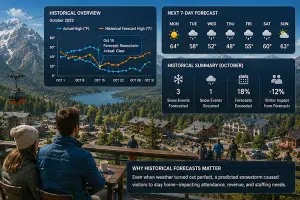
Historical and forecast data
Historical data, including historical forecasts, can help organizations prepare for customer demand, adjust staffing, plan maintenance activities, and make smarter operational decisions.
While historical weather data provides observed values for a given date at a specific location, historical forecasts indicate what conditions customers or teams expected. These predictions can significantly change behavior, even if weather conditions were optimal. For example, if an October snowstorm was predicted at a user’s location, they might have decided to stay home rather than visit a local resort, even if the predicted storm never occurred.
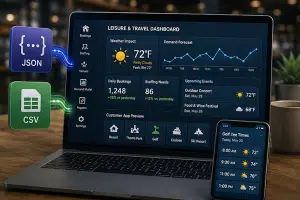
CSV and JSON Results
Structured weather data makes it easy to input this information into workflows such as booking systems, staffing tools, venue dashboards, and demand models. You can also incorporate weather data into customer-facing leisure applications, such as theme park apps or golf tee time schedulers. By displaying the weather, you empower customers to choose a tee time, contact you to cancel a reservation, or search for a week with mild weather to book a resort package.
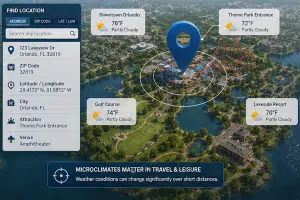
Location address geocoding
Location address geocoding lets you see the exact weather conditions at a given site, whether that is a driving range, outdoor attraction, concert venue, or indoor leisure business. This is crucial, as some areas have microclimates where weather conditions can change significantly over short distances. With geocoding, your team can make more informed decisions about guest support or everyday operations, using familiar location identifiers such as addresses or ZIP codes.
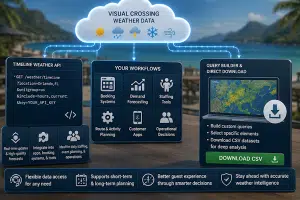
Weather API or direct download
Visual Crossing provides flexible access for travel and leisure workflows through our Timeline Weather API and browser-based Query Builder. If you need to review large amounts of data, such as for forecasting or customer demand planning, you can select the specific weather elements to focus on and download a CSV file from our website.
Other workflows, like daily staffing, event route planning, or daily operational decision-making, may be best served by the Timeline Weather API. With one API key, you can connect to real-time weather data and high-quality forecasts for more flexible, adaptive planning.
How travel and leisure businesses use weather data
The travel and leisure industries are highly weather-sensitive, making access to high-quality data essential for business continuity and customer satisfaction. Sports, golf courses, indoor entertainment centers, theme parks, resorts, and outdoor tour agencies can leverage the Timeline Weather API to support staffing adjustments, maintenance scheduling, bad-weather contingency planning, and guest operations. We also provide historical forecasts, which can be valuable for business planning and reporting.

Sports and Golf Planning
Sports venues, golf courses, and other outdoor leisure venues cannot allow guests to play when conditions are dangerous, such as during lightning storms or heat waves. With weather data, teams can prepare for adverse conditions before opening, ensuring their pitches or greens are ready as soon as guests arrive.
Teams can also use weather data to assess when demand may shift and adjust operations, whether that is bringing more staff into the clubhouse for the mid-afternoon slowdown or adjusting climate controls.
Head Count and Staffing Planning
Daily turnout at parks, sports venues, or indoor recreation zones varies with expected conditions. With weather data, teams can plan headcount, adjust staffing, and plan services. For example, a theme park expecting low turnout on a hot, humid day may shut down less-frequented attractions for maintenance so that ride operators can focus on more popular attractions. This ensures better day-to-day operational control while optimizing the customer experience.


Course, Grounds, and Venue Maintenance
Golf courses, theme parks, and resorts require careful groundskeeping and upkeep. Highly accurate forecasts help teams determine when to perform horticultural work or groundskeeping, whether that means irrigating greens ahead of a heat wave or adjusting tree-trimming schedules when growing conditions are optimal.
Certain upkeep is weather-sensitive, like chemical applications. With the weather API, teams can integrate short-term forecasts into their planning applications to select the best times for these activities, ensuring beautiful grounds year-round.
Bad-Weather Demand Opportunities
On rainy days in popular travel destinations, consumers still want to enjoy their trip but may choose alternative places, such as casinos, indoor play centers, or museums. These venues can capitalize on higher foot traffic through weather-driven demand forecasting.


Guest Experience and Operational Readiness
Many leisure businesses now have informative apps to help guests customize their experience, such as picking tee times or reviewing venue maps. Weather data can be used to communicate service interruptions or manage expectations. For example, golf courses can post information about changes to tee times, while indoor play centers can notify parents of early closures due to severe weather. This is crucial for both the guest experience and business readiness, as customers will be informed of necessary adjustments.
Weather data can also help businesses prepare for the unexpected, such as power outages due to heavy windstorms or potential flooding on golf courses. This way, teams are ready to mobilize immediately, reducing interruptions.
Historical Forecast and Customer Behaviour Analysis
While present weather conditions help businesses plan ahead, historical forecasts can provide deeper insights into customer behavior, especially if forecasted conditions did not closely align with historical data.
Historical forecast data helps organizations understand what customers expected when they were planning trips or booking activities, even if the weather turned out to be very different from the forecast. Through this analysis, businesses can assess the forecast’s impact against actual conditions and sales records, informing future operational decisions.

Start today for free
Sign up for a free account now and immediately begin using our weather API to query accurate forecast & historical data for any global location.
Historical weather and forecast data can enhance operational and customer-facing decision-making for leisure businesses, ensuring they have the comprehensive data they need to thrive. With the Timeline Weather API, you can incorporate past, present, and future weather conditions into critical decisions like venue maintenance, guest demand, and staffing.
FAQs about Weather Data for Travel & Leisure
Weather data can support smarter maintenance and groundskeeping scheduling, forecast tee time or booking demand, and help teams prepare for inclement weather.
Attendance can vary significantly with the weather, so leisure businesses can adjust staffing based on projected weather conditions. Historical data provides evidence of what conditions most impacted attendance, which can be matched to current conditions for smarter decision-making.
Lightning can be a serious safety issue for certain businesses, including theme parks and outdoor concerts. Advance warning of lightning can help keep attendees safe and safeguard vital equipment.
Yes, certain businesses benefit from bad weather conditions, including indoor venues, casinos, indoor play places, indoor parks, and museums. These businesses can assess weather conditions to adjust staffing and prepare for demand surges.
Historical forecast data show what customers expected conditions to be like, such as a high chance of rain on a given Saturday. Even if the rain did not appear, customers may have already looked at the weather forecast and decided to delay their trip. Knowing what forecast information customers used to make their decisions can explain demand shifts that may not have been obvious from the historical weather data.