

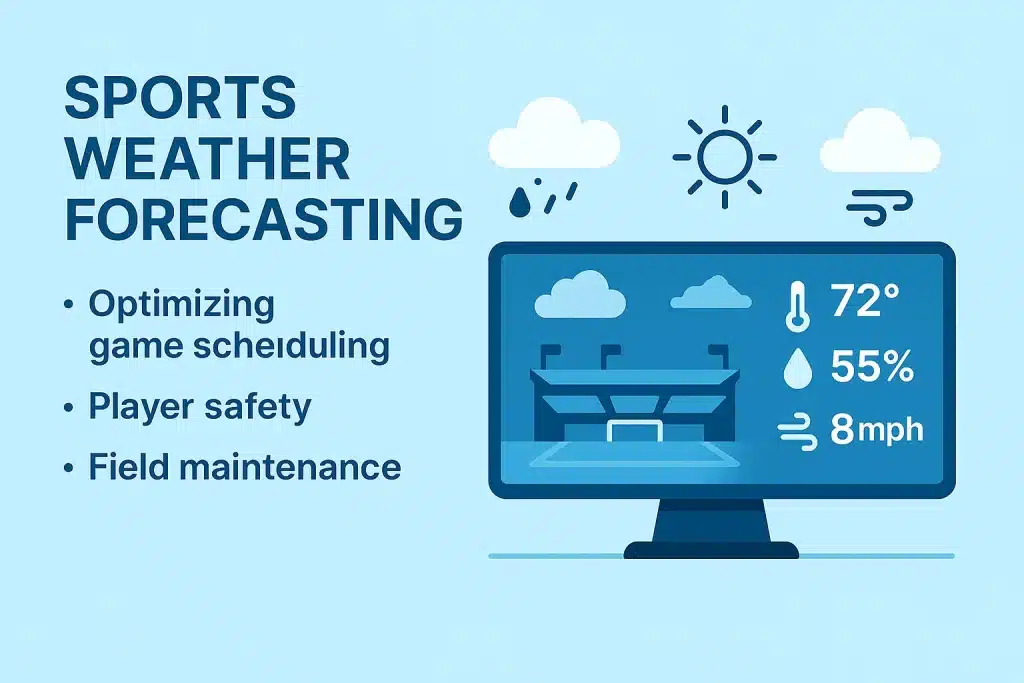
A sports weather forecast is an essential element of sports management and athletic operations. Incorporating the weather report into your operations will optimize game scheduling, ensure player and spectator safety, and facilitate better grounds maintenance.
The Role of Weather Forecasts in Sports Management
Temperature, precipitation, and humidity are common challenges for sports event logistics, particularly for outdoor sports such as football, baseball, and tennis. As such, a sports weather forecast allows organizations to make real-time decisions about safety. For example, if rain is expected near Lucas Oil Stadium in Indianapolis, Ind., managers can decide to close the retractable roof to protect the field and players.
Forecasting is also important for other elements of the sports ecosystem, such as sports betting. Things like high humidity or low temperatures can significantly impact player performance, making the difference between whether a certain team wins or loses. Understanding this allows teams to level the playing field, striking a balance between safety, enjoyment, and entertainment.
Game Scheduling and Weather Challenges
Game scheduling is highly weather-dependent, as teams may have to travel from several states away, such as flying from T-Mobile Park in Seattle to Rogers Centre in Toronto. An NFL or MLB weather report ensures that teams schedule enough travel time, avoiding cancellations or delays.
How Rain Affects Football and NFL Games
How does rain affect football games? Open-roof stadiums like the EverBank Stadium in Jacksonville require extensive turf maintenance and proper drainage to prevent soggy soil conditions. Wet grass is slippery and can significantly impede gameplay.
Another element of how does rain affect NFL games is athlete performance and spectator safety. Players could be injured falling on wet grass, while spectators could be at risk of hypothermia in a cold October downpour, presenting serious safety issues.
By integrating weather data, teams can prevent injuries and ensure spectator comfort by choosing days with sunny skies for their games.
Using Weather APIs for Real-Time Sports Forecasting
A weather API provides a clear picture of both current and forecasted conditions, which enables prompt decision-making. For example, NFL game weather data could be incorporated into event management software at State Farm Stadium in Arizona, allowing organizers to trigger roof retraction if clear skies turn into storms.
Ensuring Player and Spectator Safety
Weather monitoring enables immediate safety decisions based on extreme events, such as lightning, low air quality, or extreme temperatures. Monitoring these parameters enables managers to determine when to cancel a game or request a delay, thereby protecting both athletes and fans.
Field and Facility Maintenance Based on Weather Data
Groundskeepers and venue managers must schedule field maintenance, but they may also need to make quick adjustments based on current conditions. Weather insights provide an easy and data-driven way to monitor field moisture, temperature, and surface conditions throughout the week, ensuring the field is perfect for every game.
Forecasting for Tournament and Event Planning
Large-scale tournaments and events require seamless coordination among multiple teams and officials, including efficient resource allocation and multi-day planning down to the last detail.
Historical data allows event planners to find the perfect date for a tournament months in advance, which ensures that promoters and logistics teams can accurately market the event. This information becomes even more important as the event draws nearer, as the team can schedule their arrivals and plan for any delays.
If players are arriving from outside of America, notifying the international teams of the local forecast will ensure they arrive with what they need, such as the proper uniforms.
When it comes to supply chain management, knowing what to expect on the day of the event means that teams have the necessary resources to perform at their peak level. For example, on a warm day, managers can set up fans and tents for the players and spectators, purchase enough water to sell to spectators, and have additional medical staff on hand in case of heat exhaustion.
Benefits of Accurate Sports Weather Forecasting
Accurate forecasting is critical for all sports teams, whether they play in a closed arena or in an open-air stadium. Details like precipitation and humidity impact both player performance and the fan experience, while severe weather events may cause delays or cancellations.
Through forecasting, teams can ensure smooth scheduling, reduce injuries, and improve logistical efficiency. Tools like Visual Crossing provide specialized datasets that teams need to plan effectively, including real-time updates and seamless integration with event management software.
Sign up for our cutting-edge weather API today to gain access to over 50 years of historical data, government alerts, and advanced forecasting that will make your sports event planning easier than ever.
FAQs about Sports Weather Forecasting
How does weather forecasting improve sports scheduling?
Forecasting enhances scheduling by ensuring the optimal weather for gameplay, thereby reducing cancellations and delays. Additionally, teams can estimate their travel times, arrange groundskeeping for optimal field maintenance, and protect both players and fans by preparing for severe events.
Why is monitoring rainfall essential for football games?
Rainfall significantly impacts turf quality and can lead to hazardous conditions, meaning that teams should carefully monitor the weather and plan grounds maintenance accordingly.
How can weather APIs help sports teams manage schedules?
An API enables seamless integration with scheduling software, allowing teams to assess the potential impact of parameters such as high winds or severe storms. This means they can select dates with optimal weather and plan enough time for teams to travel between stadiums.
What types of data are included in NFL game weather data?
Weather data includes temperature, humidity, precipitation, and the chance of sun or cloud cover. Additional data can include the UV index, air quality, and government alerts for adverse events like lightning.
How does severe weather affect outdoor sports events?
Severe weather can delay start times or necessitate adjustments like closing a retractable roof. If lightning is detected in the area, spectators and players may need to be evacuated. Storms with high winds may blow away awnings and reduce visibility.
Additionally, heavy rainfall can mean the turf is wet, which could lead to players falling and getting injured. These impact the player experience and game revenue, meaning that teams must prepare for these adverse events.