

Severe weather preparedness saves lives. By the time a severe thunderstorm or flash flood hits, there’s little time to respond, meaning that having an emergency plan is crucial for an effective and life-saving community response.
Public safety relies on risk management, good communication, and prompt emergency alerts. By understanding and planning for weather-related hazards, local officials and the general public can prevent property damage and protect their loved ones from harm.
Understanding Severe Weather and Its Risks
Severe weather comes in many forms, each of which comes with its own risks.
- Hurricanes: Severe weather risks from hurricanes include building damage from sustained winds and water intrusion. These can leave homes and entire communities without power, potentially leading to disease or death.
- Flash Flooding: Sudden and heavy storms can cause enormous water surges that can destroy homes, wash away cars, and destroy infrastructure. As they are difficult to escape, many people drown in floods every year.
- Tornadoes: Tornadoes lead to extremely damaging winds that can break windows, tear the roofs off family homes, or tear down infrastructure.
- Blizzards: Heavy snow and ice can cause car accidents, roof cave-ins, and leave people stranded for hours.
- Heatwaves: According to the National Weather Service, heatwaves are the leading cause of weather-related deaths, resulting in hundreds of deaths per year. It is especially damaging to children and the elderly, who cannot regulate their temperatures as well as a healthy adult.
Core Elements of Severe Weather Preparedness
Families, businesses, governments, and neighborhoods can prevent injury or death by being prepared. These are some of the most crucial elements to consider.
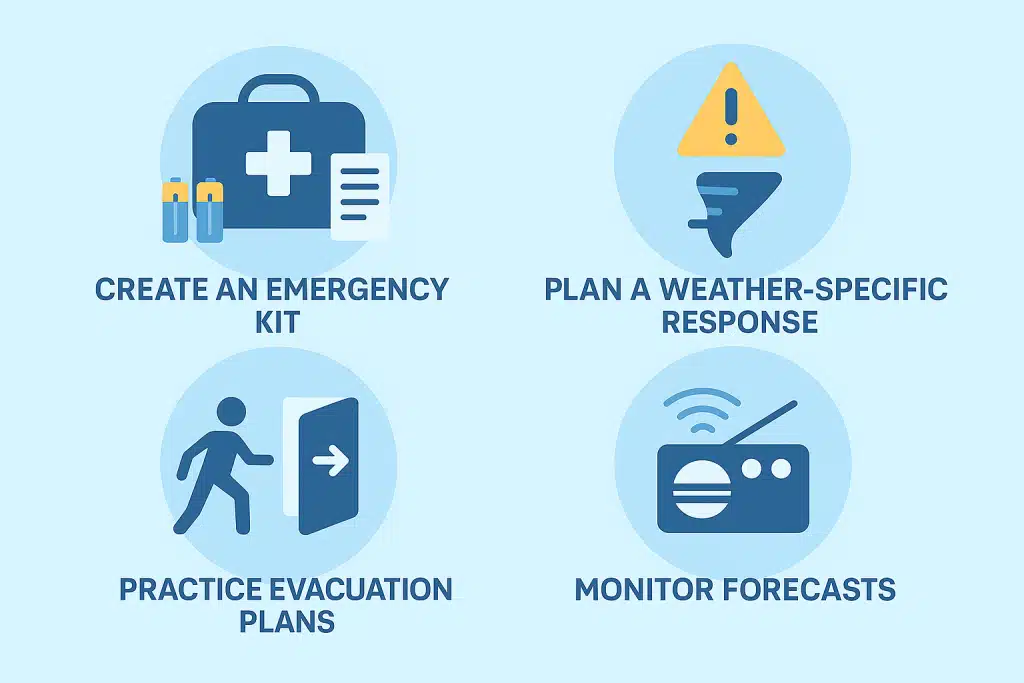
- Create an Emergency Kit: Families should have an emergency kit prepared for every member of the family. This should include important documents, batteries, a weather radio, hygiene supplies, medications, food, and water. If you’re not sure what to include, visit Ready.gov for a checklist.
- Plan a Weather-Specific Response: Each type of severe weather requires a different response. When tornadoes are spotted, you should get to the lowest level of a building, while flooding requires you to either leave the area or get to the highest level. Ensure your loved ones know the right response to each type of disaster.
- Practice Evacuation Plans: Whether at work or home, knowing where to go when disaster strikes is crucial. Have a list of emergency contacts available to you, preferably in writing in case your phone is unavailable. Know where your emergency kit and important documents are so that they can be ready at a moment’s notice. Families should agree on a meeting place in case they get separated while evacuating.
- Monitor Forecasts: NOAA weather radio is a vital way to stay informed about severe weather occurring in the vicinity. You can also sign up for emergency alerts through a weather API like Visual Crossing, available at the click of a button.
Safety Tips for Severe Weather Events
- Shelter in Place: For tornadoes, get to the lowest level of the building. Flash flooding moves quickly, so it’s essential to get to the highest possible structure. Never drive through floodwaters. When a hurricane is approaching, cover all windows and stay inside your shelter.
- Avoid Flooded Areas: To stay safe, travelers should always heed this warning: Turn around, don’t drown. Floodwaters may be contaminated, and they move with incredible power.
- Stay Informed Through Alerts: If you have a NOAA weather radio, listen for important advice issued by the local NWS station. Heed any warnings provided and be prepared to leave if necessary.
Importance of Severe Weather Warnings
The general public may not be aware of the difference between a severe weather warning and a watch. As such, government-issued alerts may not have the intended effect.
A severe weather watch means that conditions are favorable for a severe storm system to emerge. For example, heavy rain may make flash flooding possible. Those outside are asked to travel to higher ground, and workers should be prepared to evacuate if their workplace may be affected.
In contrast, a warning means that there is imminent danger, and those in the affected area should take immediate action. For example, a severe thunderstorm warning means that lightning has been detected in the area, so individuals should seek shelter as soon as possible.
Government agencies and alert systems must provide actionable advice that the general public can use, such as getting to higher ground during flooding or staying inside when lightning is nearby.
For situations that require evacuating, emergency apps should explain the consequences of refusing to leave. This is not meant to scare the public, but to impress upon them the serious risks they face if they ignore warnings.
Emergency Response and Community Coordination
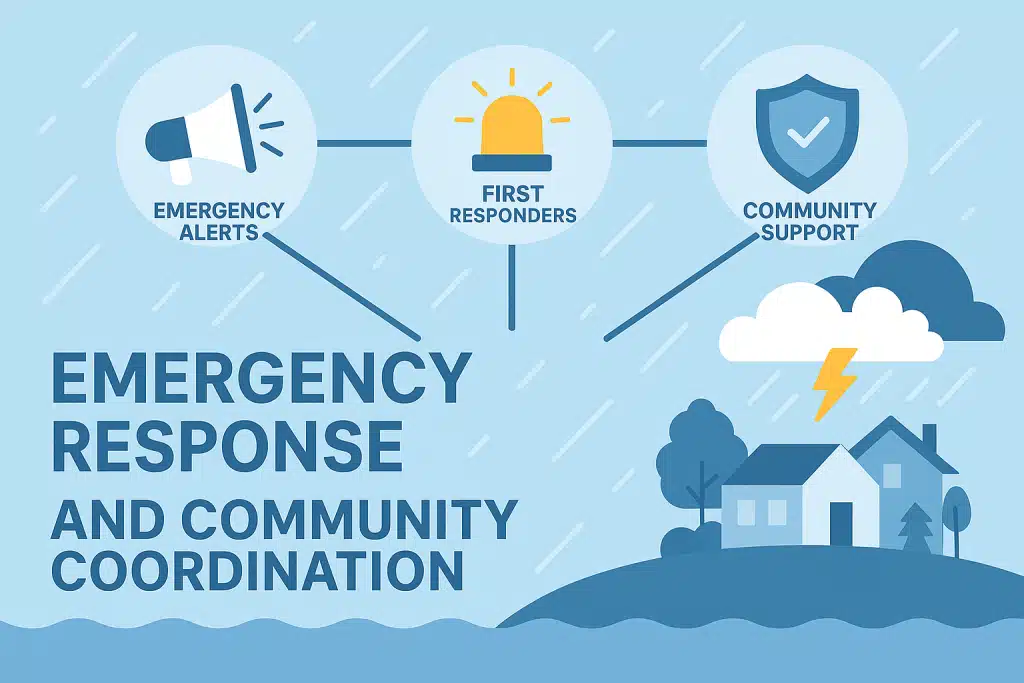
Emergency plans are not just about keeping your family safe, but also about preventing unnecessary strain on the emergency response system.
On the regional level, agencies should coordinate their responses to ensure fast service and minimal disruptions. First responders, hospitals, shelters, and utility companies can collaborate to issue warnings, evacuate citizens, assess damage, identify safe work practices, and communicate repair timelines.
Tools and Resources for Staying Prepared
Individuals and families can leverage weather radios, mobile alert apps, and official government websites to stay up-to-date on severe weather and respond quickly.
The National Weather Service issues alerts through mobile devices and on the radio; however, its website also provides weather forecasts and resources for emergency responses.
NOAA Weather Radio broadcasts alerts on a specific bandwidth for your area. You can purchase a weather radio from a local retailer or call your local NWS office. Many of these models utilize a hand crank, eliminating the need for batteries, and they may also serve as a flashlight and phone charger. This is a key piece of equipment for your kit.
Mobile apps can be a great way to stay up-to-date on emerging weather conditions, although they do require a cellular signal. You can check forecasts, search for severe weather warnings, and determine when it’s time to leave.
To ensure you’re prepared, consider using checklists and guides from Ready.gov, the US government’s official disaster preparedness resource. This website provides a wealth of information on different disaster responses.
Building a Culture of Preparedness for the Future
Severe weather preparedness is an ongoing process that requires education and situational awareness. Local governments, businesses, and families can collaborate on long-term safety strategies that protect property and save lives, such as building tornado shelters, offering support during hurricanes, and coordinating before disaster strikes.