

Weather API licensing outlines the permitted uses of the weather data received from the provider, such as distributing daily and hourly forecasts to end-users or publishing historical weather data. This is crucial information for businesses, developers, and organizations seeking seamless integration of weather conditions into their applications.
What Is Weather API Licensing?
Weather data provides actionable insights on current conditions and enables users to explore historical information that may impact their business. Through weather API licensing, providers balance the need for accurate weather forecasts with their company’s data limits. These licenses govern access to weather data types, permissions, and data limits.
Why Licensing Matters in Commercial Applications
With a weather API, commercial use typically means that the client will be integrating the data into for-purchase apps, websites, or software. For example, they may be building a weather app, accessing current weather data for business operations, or exploring historical weather data to anticipate business needs.
Common Types of Weather API Licenses
Providers typically provide a variety of licenses depending on the client’s needs. These include the following.
- Free Trial Licenses: The client can use daily forecasts and a limited amount of historical data. Available data can include basic elements such as temperature, precipitation, cloud cover, wind speed, and humidity. A free key is suitable for small companies, academics, and students who need a limited subset of historical data or limited requests.
- Metered Licenses: The cost of these licenses is calculated based on the number of requests you make per day. While you can access a broad range of data from any location in the world, you have to pay for each request. This offers a bridge between a free tier and a monthly plan. With a metered license, you can run multiple queries at once for different parameters, making it highly useful for those who need robust data analysis for a smaller project. At a low query volume, it is highly affordable, but those who need a large volume of API calls may want to choose a corporate or enterprise plan.
- Commercial Licenses: While a free license enables commercial use, it allows only limited queries per day and may not be suitable for high-volume data analysis. A corporate license has a larger request limit and will also provide you with access to a fuller range of weather data, such as solar irradiance, dew point, UV index, and satellite imagery. You can also push government weather alerts, such as those from the National Weather Service.
- Enterprise Licenses: Enterprise customers need precise forecasts, often with specialized data like solar irradiance and highly local weather models. An enterprise license provides guaranteed query rates, more uptime, higher monthly volume, and unique datasets.
- Academic/Scientific Licenses: These are for researchers, such as those using machine learning to model climate change. Typically, you can gain access to certain tools you need for your project, but cannot redistribute the information.
Understanding Usage Rights in Weather API Agreements
Weather API usage rights encompass a broad range of agreements, which include the following.
- Data Storage: This involves whether you can store the data locally on your own servers.
- Redistribution: Most providers do not offer open data distribution, meaning you cannot share the data with your clients or make it publicly available.
- Internal or External Use: Some licenses will only allow you to use the data internally, such as pushing severe weather alerts to your employees, while others will let you make weather forecasts available to the general public.
Weather API Restrictions Developers Need to Know
Weather API restrictions vary by provider and by license. These are some of the most common ones you will encounter when choosing your license.
- Call Limits: Your license allows you to make a certain number of record requests in a given time period, such as by day or by month.
- Redistribution Bans: With these bans, you cannot share the weather data with other parties outside of the organization.
- Resale Prohibitions: These prohibitions prevent you from commercializing the weather data, such as making a paid application.
Legal Issues Surrounding Weather API Licensing
You must recognize weather API legal issues before signing a contract. For example, unauthorized redistribution constitutes a copyright violation and may result in your account being banned. Other breaches of the terms of service, such as removing attribution marks, could result in your access being terminated.
Comparing Free vs Paid Weather API Licensing
A free key typically has limited features, such as hourly forecasts that you can retrieve in a CSV or JSON format. However, you will not be able to use the information without attribution or for commercial purposes.
In contrast, a license allows you more weather information, such as checking historical data on any location worldwide. You also have legal protections like guaranteed uptimes, the right to redistribute, and no attribution requirement.
API Call Limits and Data Redistribution Rules
A service provider cannot handle unlimited requests from every user, making it crucial that they have call quotas in place. Additionally, failing to improve restrictions on storing or redistributing weather data would make it untenable to continue offering access to their databases, as the information would be open access.
As such, providers set limitations on their licenses to preserve their intellectual property and server loads.
Geographic and Industry-Specific Licensing Considerations
Licensing can vary depending on where the data is used and the industry it is applied to. The European Union has different privacy laws from the United States, meaning that some providers may not be able to provide services in other world regions.
Industry also plays a key role. Certain industries, like insurance, require vast amounts of historical weather data to predict customer needs, while aviation customers require highly granular weather forecasts that focus on precipitation, temperature, and wind speed. As such, providers may offer different licenses for specific industries so that customers only receive the data they need.
How to Review and Negotiate a Weather API License?
- Clarify the types of weather data you need to select the right product.
- Read the license requirement carefully, particularly about redistribution, attribution, and data storage.
- Discuss any unclear terms with the provider before signing anything, which ensures you have a complete understanding of your obligations.
- Reach out to the provider if you require expanded rights, such as redistribution, and discuss whether an upgrade of your license is necessary.
Best Practices for Staying Compliant with Weather API Licensing
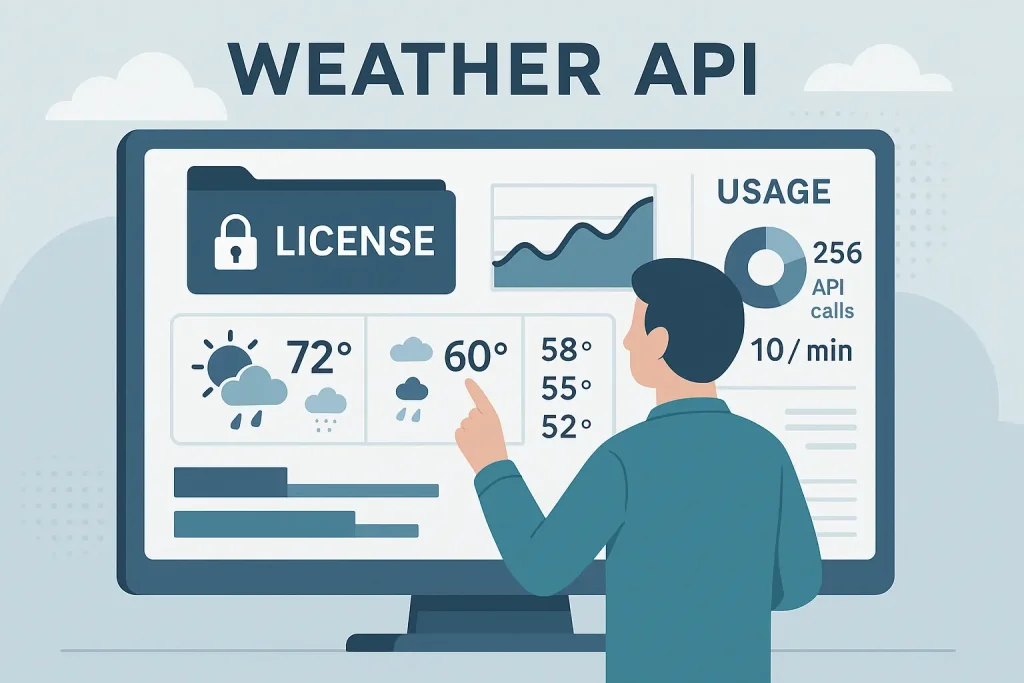
Keep an eye on how much data you use each month to ensure you respect your quotas. Your current request limits should be available on your account dashboard. Additionally, regularly review terms and contact the provider if anything changes so you are both on the same page.
Final Thoughts on Weather API Licensing
Reliable, high-resolution, and accurate weather data is invaluable for companies in many industries, including energy generation, agriculture, and logistics. However, understanding weather API licensing is crucial to maintaining a positive relationship with your API provider and ensuring you can receive accurate forecasts.
Review terms carefully, clarify anything you don’t understand, and don’t hesitate to reach out to the provider’s support team if your needs change. This way, you’ll always have precisely the weather forecasts you need to stay at maximum operational efficiency.
FAQs on Weather API Licensing
What does weather API licensing cover?
Licensing covers the scope of use, weather data limits, and attribution requirements.
Can weather API data be used for commercial applications?
Yes, weather data can be used for commercial applications with the proper license.
What are the most common restrictions in weather API agreements?
The most common restrictions are request limits, attribution requirements, commercial or non-commercial usage, and data integrity.
How do weather API usage rights differ by provider?
Yes, different providers will have different requirements. Some do not allow you to redistribute any weather information, while others will allow this at a certain licensing tier.
Are there legal risks when using weather APIs without proper licensing?
Yes, there are legal risks to using data without proper licensing or breaching the terms of service. You may face license termination, restricted requests, or even a lawsuit if there is a gross breach of contract.
What is the difference between free and commercial weather API licenses?
Free access typically comes with usage limits, including requirements for non-commercial use and attribution. A commercial license will enable you to use the tool for commercial purposes and, at certain licensing tiers, without attribution.
How can I check if my use of a weather API is compliant?
You should review the terms and conditions of your chosen provider to ensure that you are in compliance.
Can I redistribute weather API data to my customers?
This depends on the specific provider, but most will allow you to distribute weather data if you have a commercial license.
What happens if I exceed API call limits in a license?
If you exceed your limits, you will receive error messages, have your data throttled, or receive warnings asking you to upgrade your subscription. To ensure seamless access, check your license limits and consider upgrading if you receive error messages.
Do weather API licenses vary by country or industry?
Yes, licenses can vary by country and provider. It’s crucial that you understand what your API key and license can access and speak to the provider’s support team to make informed decisions about what license is right for you.