

The Air Quality API easily integrates air quality indexes and weather data to provide more accurate measurements of current conditions. As air pollution is a key indicator of both human and environmental health, high-quality data can help policymakers, researchers, and the general public make more informed decisions.
What Is an Air Quality API?
An air quality API combines weather-related environmental data with pollutant information from databases and sensors. This provides a more complete picture of local conditions, which typically covers information like current temperatures and precipitation.
Why Air Quality Data Matters for Environmental Monitoring.
Air quality is a key element of environmental monitoring systems, considering the real-world impact of pollution on human health and the ecosystem. Governmental systems can use this to monitor compliance with regulations, while private organizations can make business decisions that ensure employee well-being.
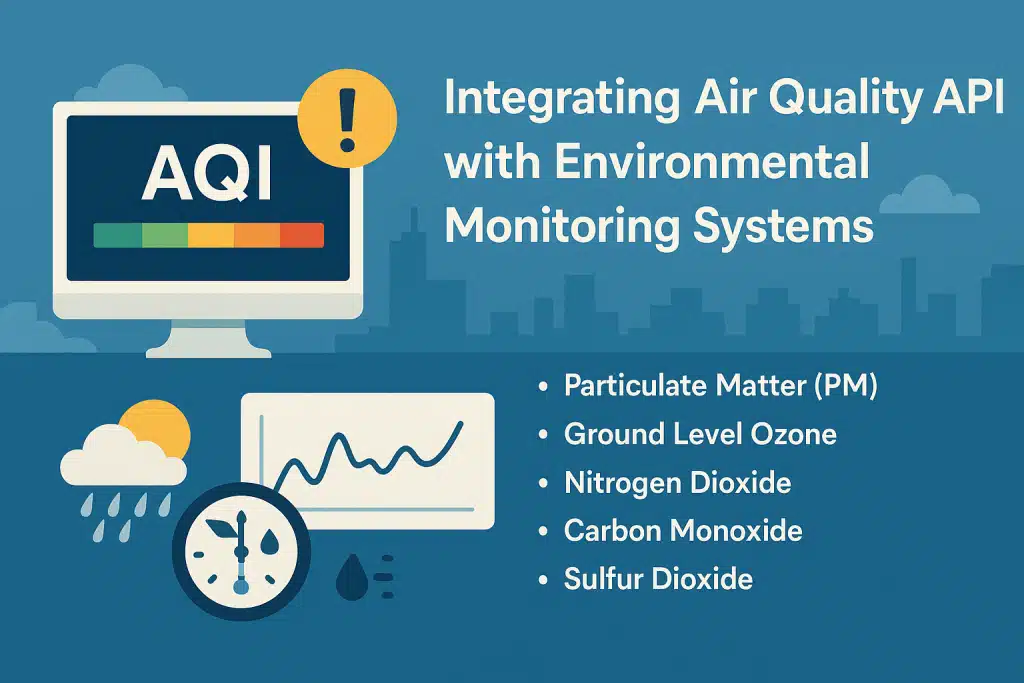
Key Pollutants and Indicators in Air Quality APIs
Particulate Matter (PM): This mixture of solid particles and liquid can enter the lungs, causing respiratory issues. There are two types, based on particulate size: PM2.5 and PM10. These are measured by micrograms per cubic meter (µg/m3).
Ground Level Ozone: Ozone at ground level traps UV rays and causes chemical reactions that increase pollution, leading to respiratory issues. This may be measured in parts per billion or µg/m3.
Nitrogen Dioxide: This highly reactive gas aggravates the respiratory tract and contributes to acid rain, which damages foliage. It is also measured in parts per billion.
Carbon Monoxide: CO causes neurological issues and cognitive impairment, making it a key pollutant to measure. In an API, it is presented in parts per million (ppm).
Sulfur Dioxide: SO2 irritates the mucous membranes, acidifies the soil, and can corrode buildings. It is measured in parts per billion (ppb).
Together, these pollutants are used to make the air quality index, which ranges from 0 to 500. Anything above 151 is considered dangerous for the general public, while values below 50 are healthy for almost everyone.
Integrating Air Quality APIs with Environmental Monitoring Systems
When organizations integrate air quality weather API into their existing software or dashboards, they harness the power of real-time information for their specific location, all without having to store information in their own server rooms. Users can obtain real-time information through automated requests.
Visual Crossing Timeline Weather API allows users to create customized reports with the specific data they need, scalable up to the enterprise level. Whether you’re using a free account or purchasing data for your entire company, we have a robust product line with specialized dashboards.
The Role of Weather Data in Air Quality Analysis
Weather data is a crucial element of AQI because wind, temperature, and humidity will all affect pollutant dispersion. By combining environmental monitoring systems with meteorological data, users gain a holistic perspective of overall conditions.
Enhancing Monitoring with Environmental Weather Analytics
Environmental weather analytics includes both AQI and weather to gain actionable insights. For example, users can see that AQI is low while humidity is high, which could create hazardous conditions for vulnerable individuals. This allows businesses to decide whether to delay certain activities and protect their employees.
Setting Up Alerts with an Air Quality API
With the Visual Crossing API, developers have the data they need to set up alerts when specific pollutant parameters are exceeded. Our air quality alerts page explains their significance and shows how to set them up using our web services.
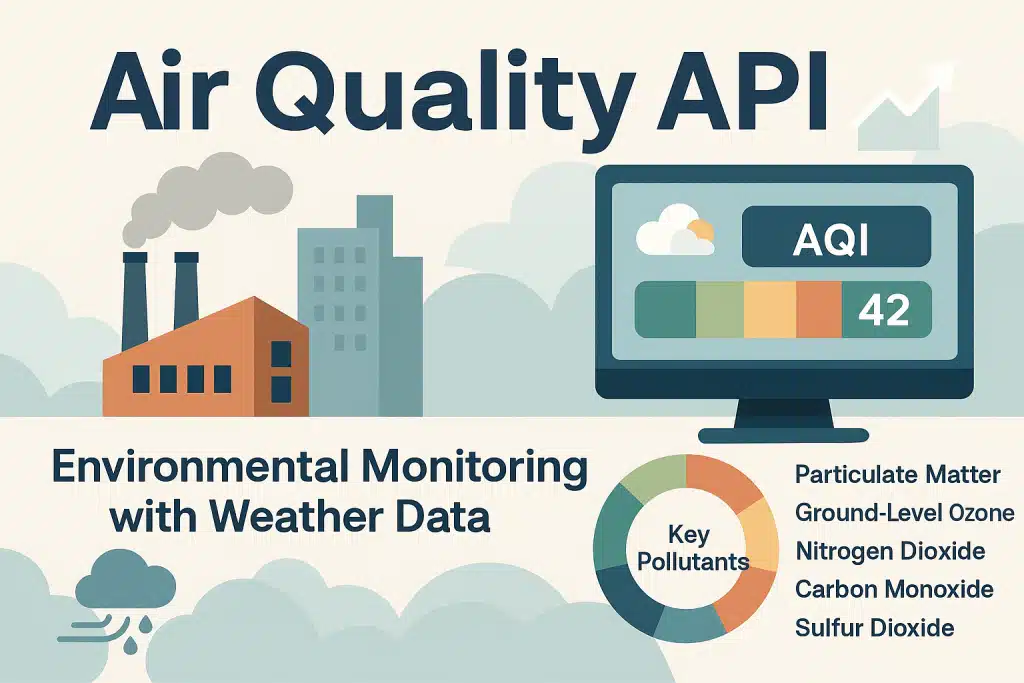
Using Air Quality Forecasting Models
Forecasting services anticipate pollution spikes or weather events through predictive modeling. By understanding air quality forecasting models, policymakers and businesses can detect potentially hazardous conditions and take proactive measures, like issuing stay-at-home orders or adjusting their workflows.
Benefits of Real-Time and Historical Air Quality Data Access
Both real-time and historical weather API environmental data can play a key role in an organization’s processes. Real-time updates enable immediate decision-making regarding safety, while historical data enables organizations to analyze trends and ensure compliance with all relevant environmental regulations.
Applications Across Industries
Dozens of industries have maximized productivity and safety through air quality through the following activities:
- Healthcare: Issuing air quality warnings
- Logistics: Reducing pollution through reroutes
- City Planning: Updating zoning regulations
- Agriculture: Planning, planting, and harvesting
- Education: Studying climatology and meteorology
Challenges in Air Quality API Integration
Data Quality: Using a high-quality service like Visual Crossing can ensure the utmost data quality.
Compatibility: Use API libraries to ensure that the tool is compatible with your hardware.
Technical Expertise: Visual Crossing’s support team helps businesses overcome technological challenges without the need for in-house experts.
Future of Air Quality APIs in Environmental Monitoring
AI-enhanced forecasting, Smart City initiatives, and stronger government transparency are helping to drive healthier environmental outcomes while protecting the populace. The future for weather data is bright as innovation allows for more precise measurements.
Final Closing Note
An air quality API is a key element of environmental monitoring systems. By connecting weather to AQI, businesses can gain a holistic perspective on overall environmental health and make more informed decisions.