

Travel weather planning is a key element of boosting revenue and guest satisfaction in the tourism and hospitality industries. By monitoring weather conditions, companies can mitigate the impact of weather delays, manage their operations more efficiently, and protect guests from bad weather.
The Role of Weather in Travel and Hospitality
Weather conditions have a significant impact on the tourism and hospitality industry. Trip bookings shift at certain times of the year based on weather warnings in a given area, while companies may have to adjust their route planning and departure times depending on inclement weather.
For hotels at waypoints along a road trip, they may need to prepare for an increase in bookings during severe weather alerts.
The stress of bad weather also impacts how guests behave, especially if they’re worried about their safety during a tornado watch or winter storm advisory. By using a weather app or API, businesses can adapt to these variables and be prepared for changes in consumer behavior.
Optimizing Destination and Activity Scheduling
Destination selection and activity scheduling are highly weather-dependent. If guests expect frigid temperatures, high wind speeds, or dangerous storms, they will opt for alternative trips or adjust their departure time to avoid these conditions.
As such, companies need accurate weather information from trusted sources, like the National Weather Service and Doppler radar, to prepare safe travel routes, avoid disruptions, or help customers select the right trip for current conditions.
Managing the Impact of Weather on Hospitality Businesses.
Understanding how weather can impact a hospitality business requires companies to consider what’s important to their guests and find creative ways to minimize negative outcomes.
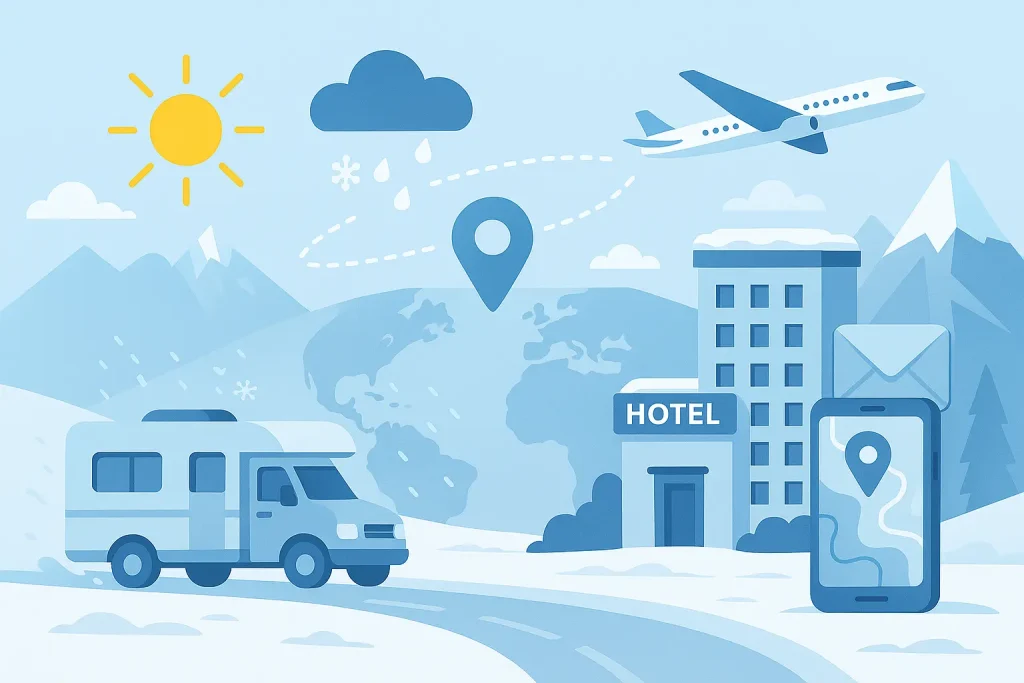
For example, few people would take an RV trip to Canada in winter. They know they may encounter a blizzard while driving or lose cell service along the road, making it hard to navigate. Some routes may no longer be safe, and there is a chance they’ll have to stop long before they reach their planned endpoint.
As such, hotels in this area will need to shift their advertising toward local guests, suggesting their services as an easy option for a staycation. They may also want to provide weather updates by phone or email to out-of-town guests, with a map of current conditions on their website.
Guests may stay longer than expected or leave sooner than intended when a winter storm hits. Hotels should be ready to accommodate them by adjusting their occupancy estimates and keep in mind that some of their staff may not be able to make it to work on time due to delays.
Weather-Triggered Advertising and Communication
The type of place someone wants to visit varies depending on the time of year and season. Weather-triggered advertising enables companies to market specific travel packages based on the weather forecast, such as pointing out the unique features of a tropical vacation to those experiencing dreary winter weather. Incorporating real-time weather details can improve engagement and conversion rates for higher profits.
Future of Travel Weather Planning
Integrating weather APIs is helping developers transform tourism and hospitality operations, boosting operational efficiency and customer satisfaction. By using tools like Visual Crossing, companies can prepare for seasonal shifts, learn about consumer behavior, and boost profits.
FAQs about Travel Weather Planning
Weather determines where consumers want to go, how they intend to travel there, and what types of services they will utilize when traveling.
Benefits of weather intelligence tools include higher profit margins, increased customer satisfaction, and enhanced operational efficiency.
Forecasting enables consumers to choose the right location and minimize travel disruptions, such as selecting a road trip during summer and opting for a cruise during the winter. This enables hospitality companies to deliver superior service and boost customer satisfaction.
Weather-triggered advertising changes marketing strategies based on current weather, such as showing advertisements for a cooler climate during a heatwave.
Real-time weather updates enable tourism agencies to minimize travel disruptions, optimize resource allocation for improved service, and provide guests with up-to-date information, allowing them to select options that best match their trip expectations.