

Unpredictable weather poses a serious challenge to successful outdoor event planning. Issues such as extreme temperatures, heavy rainfall events, or high winds can disrupt schedules, endanger attendees, and create logistical challenges.
However, this doesn’t mean an event organizer can’t create an amazing experience, no matter the weather. This guide will help organizers plan safer, smarter events and effectively manage logistical issues to minimize risk without sacrificing enjoyment.
The Importance of Weather in Outdoor Event Planning
The weather is one of the most critical factors in outdoor event planning. It impacts everything, including location selection, entertainment choices, guest safety, and scheduling.
Unfortunately, unpredictable weather has become more common due to climate change. Extreme weather events, such as tornadoes and tropical cyclones, have become more intense due to global warming, which energizes these storm systems. Heavy precipitation can come on suddenly, and a particular place may flood within minutes rather than hours.
As such, tracking severe weather events is a key factor in preventing safety concerns. Through careful planning and weather forecasts, you can ensure your target audience has an amazing time in the great outdoors.
Understanding Unpredictable Weather Patterns
The natural world has been significantly disrupted by the changing climate, making extreme weather conditions more common. Certain areas that already have significant natural climate variability, such as Florida, are now frequently dealing with tropical storms and hurricanes that were previously “once in a lifetime.”
However, major natural disasters are not the only conditions that can disrupt an outdoor event. Extreme temperatures, such as cold waves in fall or severe heat in summer, can cause physical symptoms in some individuals, while droughts can lead to power outages.
While light rain can create a dreamy atmosphere, heavy storms may be dangerous, especially if they include hail or lightning. A sudden influx of people moving indoors to escape can lead to spoiled food, damaged electronics, and dissatisfied attendees.
Organizers can enhance guest enjoyment and safety by gathering weather data and developing contingency plans for any severe weather event.
Event Logistics: Building Flexibility into Planning
An outdoor event is a carefully arranged experience with many moving parts. Event logistics covers schedules, transport, and equipment, all of which may need to be adjusted due to extreme weather events.
Firstly, organizers should build flexibility into their scheduling, such as allowing attendees extra time to arrive if there is a major storm. Even the most well-designed events will rarely start exactly on time, particularly if they are held in a secluded location or attendees are traveling a long distance. This is especially true if bad weather delays travel plans.
Because of this, planners should allow time for attendees to arrive and mingle before starting the primary festivities. For example, if the invite says 6 pm, organizers should expect that the party will “truly” start around 6:30 so that everyone is seated when primary activities start.
Transport is often a significant issue, especially if the event is out in nature. Even if attendees are likely to bring their own vehicles, ensure there is one vehicle on hand to transport attendees to higher ground or quickly haul equipment indoors.
Tarps, tie-downs, and waterproof covering can protect equipment during rainstorms. Consider having a backup generator available and ensure that everyone knows not to use it in an enclosed space.
Venue Management in Weather-Sensitive Events
While a backyard barbecue or wedding is a great opportunity to mingle with loved ones, it can quickly turn into a disaster if a sudden storm happens to roll in.
As such, organizers should ensure there is adequate cover for all guests in case of precipitation, whether that is themed temporary structures or a covered gazebo. If the power goes out, never use a generator indoors and ensure that plenty of fresh air circulates through the structure to prevent carbon monoxide poisoning.
Another option for venue management is to have a backup indoor location that can be booked if the forecasts suggest adverse weather events are likely. Ensure that attendees are aware of the adjustment and have transportation options available, such as for those who carpooled or used public transit to get to the original venue.
Outdoor Event Management Strategies for Weather Preparedness
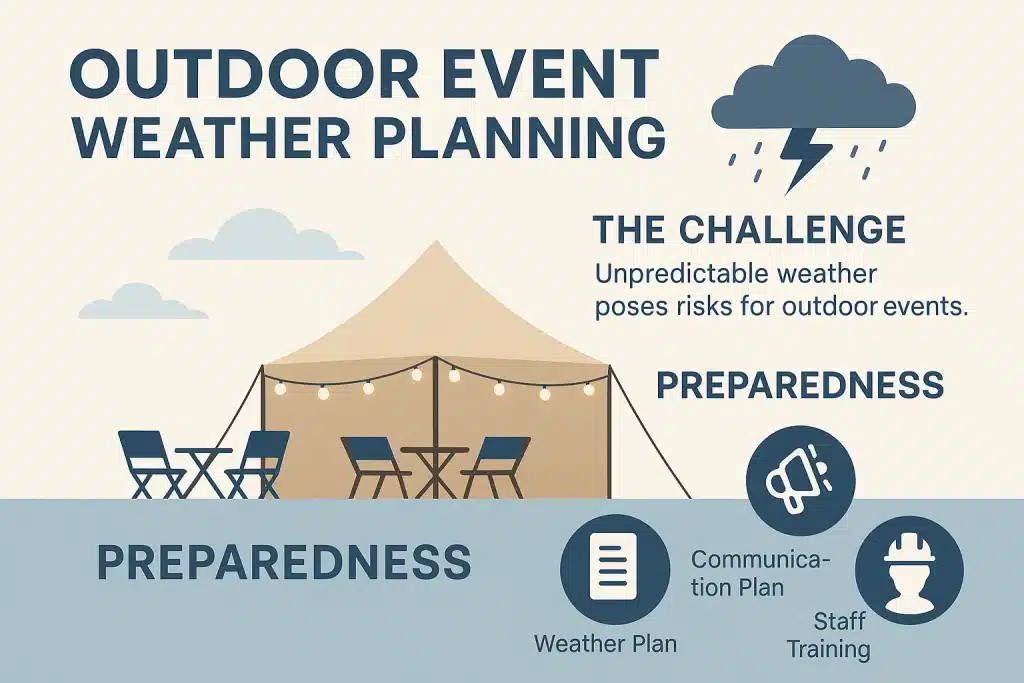
Outdoor event management involves thorough staff training, strong supply chain management, and clear guest communication.
During the preparation stage, organizers should decide their response to potential extreme weather and clearly communicate these to staff. For example, if heavy precipitation is expected, staff members should know to move guests out of the area and prepare backup transit options.
Temporary structures offer a valuable staging area for food, drink, and electronics, so they should be the first thing prepped on site. Movable furniture, like folding chairs and tables, will be easier to relocate if the event must be moved, and should be set up well in advance.
Lastly, frequent communication with everyone involved will ensure everyone is aware of alternate locations or plans if there is an issue.
Safety Considerations for Guests and Staff
At least one member of staff should be trained in first aid for weather-related emergencies, including heat stroke. Always ensure there is enough water, and consider setting up a cooling station with fans and cold water if temperatures are high.
Lightning can pose a major risk for attendees, especially if there are no tall structures or lightning rods nearby. Be proactive by checking the weather regularly and plan to move the event indoors if lightning is detected in the nearby area.
In some cases, evacuation is the only way to ensure everyone’s safety. This can be particularly challenging if the event is held in a rural area with few other structures nearby. Know where attendees should go if the area floods or there is a severe thunderstorm. Communicate this to all your staff so that they can direct everyone to safety as necessary.
If your event is taking place in the evening, consider having staff carry glow sticks or lanterns to direct traffic in an orderly manner. Provide staff with high-visibility vests that they can quickly put on when needed to assist people in locating their vehicles. You may also consider having backup floodlights, especially if this is a large event, so that people can see where they are going.
Communication Plans for Weather Emergencies
Whether attendees simply forgot they RSVPed or need last-minute direction, good communication is key to a great event. Many event planning platforms will allow you to send text alerts and emails to everyone who RSVPed; they will also offer automated alerts, reminding people that the event is coming up soon.
While social media is a great way to spread the message, not everyone may use the platforms you select, so ensure that you also send text and email updates rather than relying only on social media.
Good signage doesn’t just help people find the venue; it can also let them know of any last-minute updates. Consider purchasing a custom sign to place at the entrance, or use a small marquee board with movable letters. If there is a sudden change of plans during the event, have an emcee or other person clearly explain the new plan to everyone.
You may also have staff members move through the venue to reiterate what the emcee stated, as some people may not have been listening. Always instruct your staff to remain calm, even in the event of an extreme weather emergency or a power outage. This can help alleviate attendees’ fears and ensure that everyone is evacuated in a safe and orderly manner.
Equipment and Infrastructure Protection
Equipment-specific protection is crucial. While a few water drops aren’t going to hurt a tent or folding chair, they can ruin thousands of dollars of AV equipment.
Temporary structures should be securely staked down and bolstered with sandbags to keep them from flying away during a windstorm. Waterproofing sprays can preserve their structure, while tarps are a good way to cover chairs and tables before the event. Keep any perishables in coolers with gel ice packs or in covered chafing dishes before they are served.
Delicate electronics should be stored in waterproof containers, such as bins or a shed, until they’re needed. Ensure that any contractors know where these are and how to access them when they are needed.
Insurance and Risk Mitigation in Event Planning
Weather insurance can compensate you for cancellations or damages due to extreme weather events, but you must read the contract carefully. Ask questions about what exactly is covered, what the premiums are, and how to make a claim before you sign anything.
Instead of covering everything with a single insurance policy, consider obtaining multiple policies that will cover different aspects of the event, such as electronics or vehicle damage. Contingency coverage for weather issues will pay out if certain weather parameters are met, such as a specific amount of precipitation in an hour or wind speeds exceeding a certain threshold. This can be a good way to mitigate risks without paying higher premiums for your general liability insurance.
Scheduling and Seasonal Considerations
Due to natural climate variability, certain times of the year are more prone to extreme weather than others. For example, extreme heat will require different emergency procedures, like extra fans and heatstroke protocols, than a heavy snowstorm in winter, which necessitates additional heaters, snow plows, and backup generators.
To prevent these issues, use a tool like Visual Crossing’s statistical weather forecast to analyze historical trends. This data can be both highly precise and granular, showing the risks of certain events on given weeks or even days. While it’s not a perfect science and doesn’t guarantee perfect weather, it can help you determine whether to move your event indoors if you don’t have a flexible timeline.
Budgeting for Weather Contingencies
While every planner wants to come in under budget, accounting for weather in your budget can prevent a negative experience, low attendance, or equipment loss.
Your budget should include backup plans, such as indoor venues, extra staff, and temporary structures like tents. Depending on the season, you may also want to consider adding expenses such as air movers, backup generators, and portable heaters.
Technology Tools for Monitoring Weather in Events
Weather APIs are an invaluable resource for event planning. Before your event begins, you can check historical weather information to decide the best day for a backyard wedding or family reunion. Historical weather insights also help you determine what types of problems you may encounter and brainstorm solutions before bad weather strikes.
Visual Crossing’s Timeline Weather API uses over 50 years of historical weather data, combined with algorithms, to give general forecasts for future dates. While this tool is highly accurate, it is based on probabilities. By incorporating additional days or weeks into your forecast, you can get a better idea of what the typical weather is like at that time of year and ensure you have all your bases covered.
A weather API also provides real-time monitoring and alert systems, allowing you to be prepared if weather conditions change suddenly. This way, you can initiate your emergency responses and keep everyone present safe.
An API can be integrated into your event planning software, meaning you have all possible variables for your event in one application.
Final Thoughts on Outdoor Event Planning and Weather Preparedness
Many event planners focus on the fun aspects of an outdoor event, like themes, entertainment options, and menus. However, these can only be enjoyed to the fullest when the weather cooperates, making it crucial that planners also consider what they will do when Mother Nature rains on their parade.
While an event out in nature can be beautiful, unpredictable weather events can lead to both physical danger and financial losses. Proactive outdoor event planning can mitigate these risks and ensure every guest has a great experience.
Tools like Visual Crossing are invaluable for planning, scheduling, orchestrating setup, and staying proactive throughout the event. Whether you’re inviting family to your backyard for a reunion or orchestrating a gorgeous outdoor wedding, stay prepared by using a weather API.